
The Real History of Slavery
Here is a review of Matt Walsh's documentary series: Real History with Matt Walsh, which opens with a 44 minute episode on slavery:
Here is a review of The Real History of Slavery: Reclaiming Our History, by Peter Bradley, American Renaissance, 17 February 2026:
The Real History of Slavery begins with examples of misinformation. Schools often teach children that the United States stands alone in its wickedness...
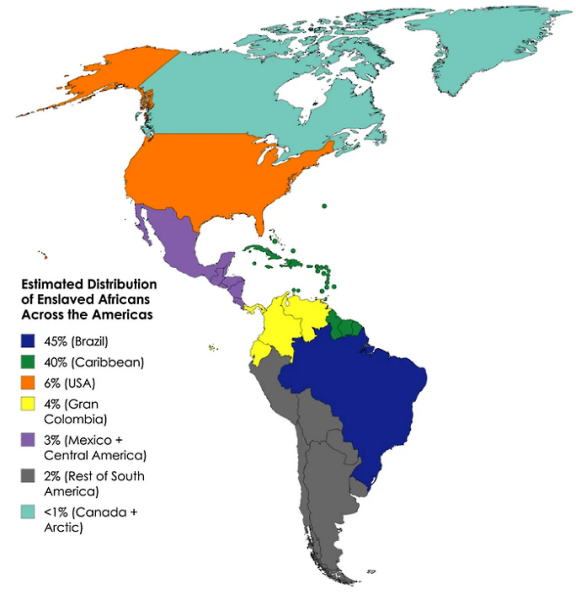
Of the 12.5 million slaves transported to the Americas during the Transatlantic slave trade, half went to Brazil. Only 472,372 - around 4 percent - arrived in what is now the United States. While it is fashionable to say that whites “captured,” “stole,” or “kidnapped” black slaves, slave traders bought them from Africans...
Slavery is as old as human history. The Real History of Slavery notes that ancient societies such as Babylon, Egypt, Greece, and Rome practiced it. Plato and Aristotle defended slavery as a natural institution. The Code of Hammurabi defined slaves as property...
The word slave derives from Slav because Muslim raiders - both Turks and Arabs - so frequently captured and sold Eastern Europeans between the 8th and 11th centuries...
This system of kidnapping, conversion, and enslavement continued for more than 300 years...
Arabs treated African slaves with extreme cruelty...
The Real History of Slavery notes that American Indians practiced a form of slavery in the New World that was at least as brutal as Muslim slavery and often involved cannibalism...
Between 1620 and 1776, up to 70 percent of British immigrants to the United States arrived as indentured servants - a number that probably surpasses the population of black slaves brought to the colonies...
A World History of Slavery, by Michael Walker, American Renaissance, 8 May 2026, is an extensive review of the 2018 book by Egon Prof. Flaig: Weltgeschichte der Sklaverei (A World History of Slavery). Part 1 focuses on slavery in Greece and Rome. Part 2 discusses slavery under Islam, and includes pertinent statistics:
Prof. Flaig... opens this chapter with a stark assertion: "When the Muslims conquered a global empire, they set up the biggest and longest-living slave system in world history."
Prof. Flaig argues two essential points in this chapter. First, both in terms of numbers of the enslaved over time and the geographical area where Islamic slavery prevailed, its dimensions were greater than those of any other intrusive slave society. Second, by their nature, Islamic societies, at least those under Sharia law, are intrinsically disposed to favor and promote slavery, specifically slavery of non-Muslims, and that is why the greater part of the history of Islam has been the history of a rapidly expanding intrusive slave society...
"When the Muslims conquered Spain between 711 and 720, they enslaved 150,000 people. . . . From Sind, conquered in 712, the victors exported 60,000 slaves. The second wave of expansion struck North Africa, and particularly India, where hordes of Afghan riders with their continual attacks brought hundreds of thousands of Indians into slavery..."
"The Tartars from the Crimea enslaved, between 1468 and 1694, 1.75 million Ukrainians, Poles, Russians, and that is not counting the enslavement of Circassians and Georgians in the Caucasus. The prisoners were sold from the Crimean ports to the Ottoman Empire, about 2.5 million between 1450 and 1700. . . . [F]rom 1350 to 1550, jihads against the Balkans were practically yearly events, and from 1450 onward, Turkish fleets laid waste to the shores of the Mediterranean . . . between 1530 and 1780, enslaving about 1.2 million Europeans..."
"From 1565 onward, jihads [of Muslim Moros based in the southern Philippines] led to the capture of about 10,000 slaves a year in the Philippines alone, reaching 2 million within 200 years; the numbers of slaves captured in the Indonesian islands was greater still."
Ralph Austen’s estimate of 3.9 million slaves exported from East Africa by the Arabs is, according to Prof. Flaig, "definitely too low."... The sultanate of Oman alone, after it had become a naval power in the 16th century, was importing up to 20,000 black African slaves a year...
... in Islam, conquest and enslavement of the unbeliever is desirable, indeed a duty. Religious expansion and the capture of slaves became all but indistinguishable...
... Prof. Flaig singles out Britain and France as the leaders over a hundred years in campaigns to abolish slavery...
Related
Slavery: setting the record straight on slavery
A Realistic View of Slavery & Slave Trading
White and black slavery in North Africa and America